
Public Spaces & Safety
Shopping centres, transport hubs, hospitality venues and leisure facilities all contain areas where visual surveillance may be inappropriate. Acoustic AI provides an additional layer of awareness, detecting configured sound events and alerting your team when attention may be required.
Intelligence where cameras can’t go.
Your highest risk spaces are the ones you cannot watch
Public venues operate under a clear duty of care to staff and customers. Yet a significant proportion of the spaces where incidents are most likely to occur - public toilets, changing rooms, back-of-house areas, and private facilities cannot be monitored by camera.
Traditional alternatives such as security patrols, basic panic buttons, decibel alarms are reactive, expensive, and demonstrably insufficient in high-footfall environments.

Public Venue Ready

Privacy by Design

Edge AI

Real Time Alerts
The Monitoring Gap
Public venues contain areas that conventional CCTV cannot appropriately cover — including toilets, changing facilities and other privacy-sensitive spaces.
That creates an operational blind spot. Security and facilities teams may only become aware of an incident when somebody raises an alarm, a member of staff happens to be nearby, or the event has already escalated.
Acoustic AI adds another layer of awareness. It continuously analyses the acoustic environment for configured event types and can alert the appropriate team when an event requiring attention is detected.
It is designed to complement existing security procedures, staff patrols and emergency systems — extending awareness into areas where conventional monitoring may not be suitable.
The Acoustic AI Solution
Continuous acoustic intelligence for the spaces conventional monitoring can't reach.
Our solution deploys acoustic sensors at agreed monitoring points across your venue, including areas where visual surveillance may be inappropriate.
Deeply AI's edge-based classification technology analyses acoustic patterns in real time and identifies configured event types such as distress, raised voices, breaking glass and other relevant acoustic events.
When a configured event is detected, your operations or security team can receive an alert containing information such as event type and location — enabling them to investigate and respond appropriately.
The system is designed around edge processing and data minimisation, helping organisations introduce additional situational awareness without relying on cameras in privacy-sensitive spaces.

Data Minimisation
The architecture is designed to minimise the acoustic data processed and retained. Deployment-specific data handling and retention requirements are agreed as part of implementation.

No Voice Identification
The system is designed to classify acoustic events rather than identify individuals by their voice.

Edge Processing
Acoustic analysis takes place locally at the edge, reducing reliance on external cloud processing and limiting the movement of raw acoustic data.
Multiple environments.
One proven solution.


-
Public toilets, car parks, service corridors, and staff-only areas. Detect distress calls, altercations, and anti-social behaviour in real time. Reduce incident response times and support duty of care obligations to customers and staff.
-
Stations, airports, bus terminals, and associated facilities. Continuous monitoring in public toilet facilities, waiting areas, and isolated passenger zones.
-
Gyms, sports centres, swimming pool changing rooms, and club facilities.
Acoustic monitoring in changing rooms and shower areas without any visual surveillance — meeting operator duty of care obligations while fully respecting user privacy.
-
Schools, colleges, and universities. Toilet facilities, corridors, and common areas where cameras are inappropriate. Real-time alerting supporting safeguarding obligations under Ofsted and DfE frameworks.
-
Council offices, libraries, court buildings, and civic facilities. Staff safety monitoring in isolated areas and public-facing spaces where duty of care obligations apply but visual surveillance is restricted.
What We Detect
Recognised Sound Events
Comprehensive acoustic recognition for high-footfall public environments.
The system can be configured to detect acoustic event types relevant to each deployment.
Rather than attempting to monitor everything, active detection categories and sensitivity levels can be configured around the venue's specific environment, operational requirements and risk profile.
Available detection categories depend on the deployment configuration and validated Deeply AI models.

Aggression & Disorder
Male Shouting
Female Shouting
Disturbances and Riots
Conversation (elevated)

Physical Incidents
Glass Breaking
Explosion Sounds
Gunshots
Car Sounds
Construction Noise

Human Distress
Help me
Please help
Male Scream
Female Scream
Crying
Sobbing
Groaning
Noise Resistant Analysis
Built for real-world environments
Public venues present one of the most acoustically challenging monitoring environments such as high footfall, ambient music, HVAC systems, and constant background noise make traditional sound-triggered systems unreliable.
Our system is powered by Deeply AI's proprietary acoustic foundation model, trained on years of real-world environmental data across operational deployments in urban public safety, transit infrastructure, and high-noise industrial environments.
Deeply AI's acoustic models are designed to distinguish relevant acoustic events from complex background sound, supporting deployment in busy and acoustically challenging environments.
In a separate industrial application, Deeply AI reports 99.87% classification accuracy in Hyundai Motor Group production environments operating above 85dB. This figure relates specifically to that industrial deployment and should not be interpreted as a detection accuracy figure for public-safety applications.
Deployed in the Real World
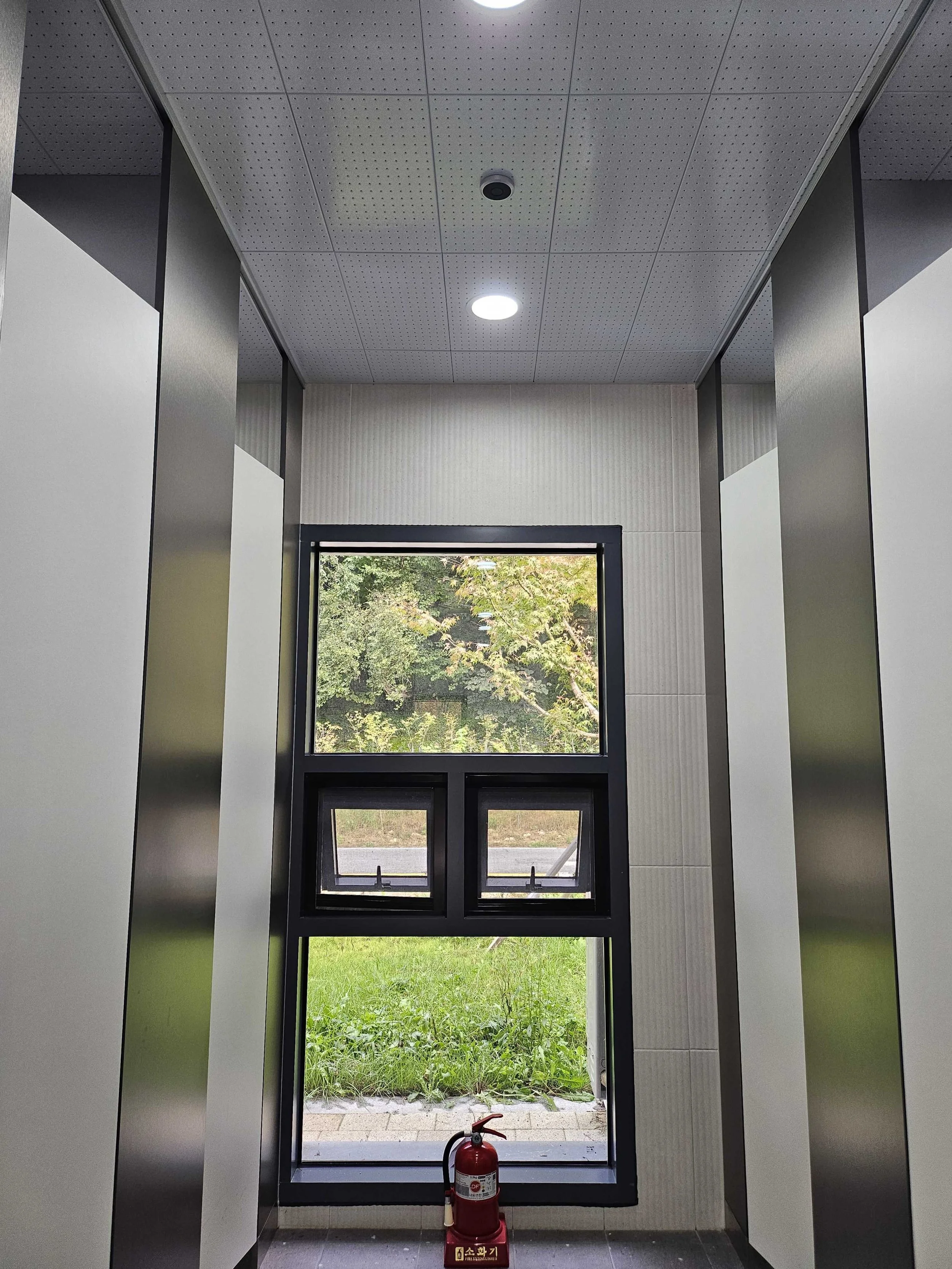
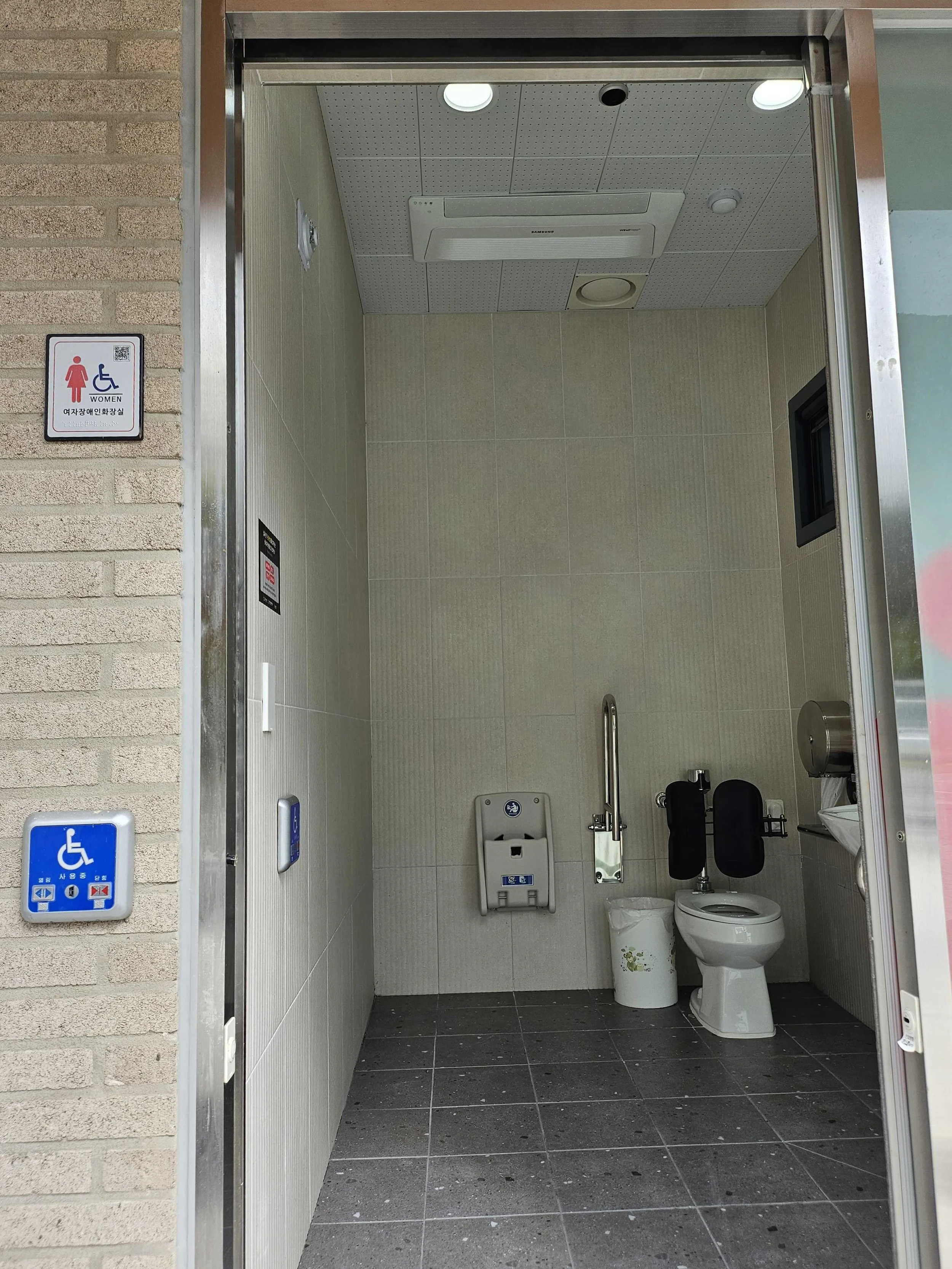
Our technology has been deployed in live public environments — including Naejangsan National Park in South Korea, where acoustic sensors monitor public toilet facilities for distress signals. Visitors are informed that conversations are not recorded — only emergency acoustic signals are detected.
Live deployment of public toilet acoustic monitoring, Naejangsan National Park, South Korea. Powered by Deeply AI.
The Monitoring System
Operations & Management
Every deployment includes access to a web-based monitoring dashboard, giving your security operations centre or facilities management team a centralised view of acoustic activity across all monitored zones, across multiple sites if required.

Instant Multi-Channel Alerting
Real-time notifications via email, SMS, and our Dashboard - delivering alerts directly to security control rooms or individual responders.

Event Management
Search and filter detected events by information such as time, location and event classification, providing an operational history of system activity.

Remote Equipment Management
Monitor sensor status across all deployed units. Configure settings and perform remote restarts without requiring on-site engineer visits.

Configuration Management
Adjust sensitivity levels and active sound categories per zone to match your specific venue risk profile and operational requirements.

Real-Time Analysis & Configuration
Live acoustic analysis with instant event detection. Configure analysis cycles, sensitivity levels, and active sound categories per zone.

Statistical Reporting
Analyse detected events by day, time period, location and event type to identify patterns, recurring activity and areas that may warrant operational attention.
Privacy by Design
Designed for privacy-sensitive environments
Acoustic monitoring may be used in environments where privacy, data protection and human rights considerations are particularly important.
For that reason, the solution is designed around edge processing and data minimisation. Acoustic analysis takes place locally, and the system is designed to classify relevant sound events rather than identify individuals by voice.
The precise data processed or retained, retention periods, access controls and other privacy requirements will depend on the deployment configuration.
Acoustic AI Systems works with customers to establish the appropriate technical and organisational measures for each UK deployment and to support their own data-protection assessment.
Key principles:
Edge-based acoustic analysis
Data minimisation by design
Event classification rather than voice identification
Deployment-specific access and retention controls
UK deployment documentation and privacy support